|
Shafer pigeons, Andijan Tumblers, and Serbian Highflyers at the
German Pigeon Show in Leipzig from December 5th to 7th, 2025
Three
foreign breeds were shown in Leipzig in the new breeds class at the
VDT show as preliminary stages for potential inclusion in the German
breed standard.
Shafer pigeons,
ice-colored like Damascus pigeons, originate from Lebanon. The name
is also spelled Shafra, and in addition to the ice-colored plumage,
other color variations exist. They differ significantly from
Damascus pigeons in figure, posture, and head shape. Given their
appearance, it is plausible that they originated from Damascene
Pigeons and higher-standing Bagdettes.
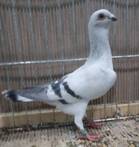 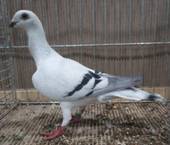
Shafer Tauben eisfarbig mit Binden
Andijan Tumblers
are a breed of tumbler pigeons from Uzbekistan; Andijan is a city
bordering Tajikistan. In Germany, our knowledge of Uzbek pigeons is
primarily based on the German- and Russian-language book by
Saradshan from the capital, Tashkent. He focuses on the modern,
short-beaked type with a pronounced feather structure, which is
popular in Tashkent and likely originated largely in and around the
city. In contrast, Uktam Obidov from Bukhara focuses his books on
the traditional highflying and tumbling pigeons of Bukhara and other
regions. These pigeons are either clean-legged or groused, and
plain-headed or with a small shell- crest.
This group of flying pigeons also includes
Andijan Tumblers, which, unlike the others with the shell-shaped
crest, have a peak crest. Obidov (p. 157) cites in his 2024 book the
Russian-language book by A. I. Peshkov and O. V. Kuznetsov (2017).
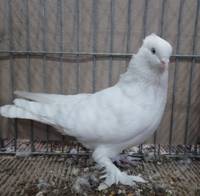 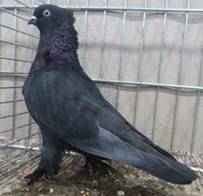
Andijan Tumblers from Uzbekitan
According to this source, Andijan Tumblers are considered a large
breed (38-45 cm) compared to medium-sized flying pigeons (34-37 cm).
Before the emergence of the "Andijan" breed, there were no large
highflyers or vertical-flying pigeons in Asian and African countries
(p. 157), which likely refers to the characteristics of clapping
pigeons.
According to Obidov, the ancestors of the
breed, large, plain-headed pigeons, were brought to Andijan in 1890
by Iranian families who migrated there. He surmises they were
Kurdish Iranians. Crossbreeding with local pigeons resulted in peak
crested pigeons, a trait not otherwise found among Uzbek flying
pigeons. An illustration in his book, written in Uzbek script with
Russian and Tajik inscriptions, depicts a group of white Andijan
Tumblers (Obidov, Uktam, БУХОРО АБОРИГЕН КАБУТАРЛАРИ ТАРИХИ (Bukhara
natives, history of the pigeons), Bukhara 2024).
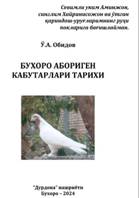 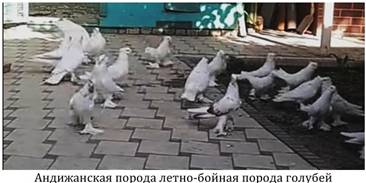
The Pigeon Book of Ukdam Obidov, Buchara 2024 with a flock of
Andijan Tumblers
The
third foreign breed shown was the
Serbian Highflyer,
blue bar and white with dark eyes. As high-performing high-flyers,
they are well-known and widespread among pigeon fanciers in a lot of
colors. As show pigeons, they made a new, and this time probably
successful, attempt to overcome the hurdles of the recognition
process.
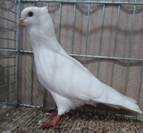 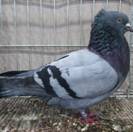
Serbian Highflyers white and blue bar
The
author first discussed them ten years ago, in 2015, in his show
report on 'new breeds', at that show also blue dark checks were
involved, (https://www.taubensell.de/011_Neu_Archiv/neuzuechtungen_leipzig2015.htm),
and they have been shown repeatedly since then.
|
